NSPIRE inspection checklist

HUD's NSPIRE checklist for HCV and PBV units. All 63 standards, each answered by severity and location. Print it, or run it from your phone.

Instructions

Key: LT = life-threatening (fail, fix in 24 hours), S = severe and M = moderate (fail, fix in 30 days), L = low (pass). Unit, Inside, Outside = where you saw it; tick every one that applies. * = affirmative habitability requirement.

Inspection details

  • PHA Text answer
  • Family identifier Text answer
  • Any children under 6 reside or are expected to reside in the unit? Yes No
  • Owner Text answer
  • Owner contact information Text answer
  • Housing type Text answer
  • Year constructed Text answer
  • Number of bedrooms Text answer
  • Type of inspection Initial Biennial Reinspection Special Quality control

Address and Signage

  • Address, signage, or building identification codes are broken, illegible, or not visible. No issue N/A M (Outside)

Bathtub and Shower

  • Only 1 bathtub or shower is present and it is inoperable or does not drain. No issue N/A S (Unit) L (Inside)
  • A bathtub or shower is inoperable or does not drain and at least 1 bathtub or shower is present elsewhere that is operational. No issue N/A M (Unit) L (Inside)
  • Bathtub component or shower component is damaged, inoperable, or missing such that it may limit the resident's ability to maintain personal hygiene. No issue N/A M (Unit) L (Inside)
  • Bathtub component or shower component is damaged, inoperable, or missing and it does not limit the resident's ability to maintain personal hygiene. No issue N/A L (Unit)
  • Bathtub or shower cannot be used in private.* No issue N/A *M (Unit) M (Inside)

Cabinet and Storage

  • Food storage space is not present.* No issue N/A *M (Unit)
  • Storage component is damaged, inoperable, or missing. No issue N/A M (Unit) L (Inside)

Call-For-Aid System

  • System is blocked, or pull cord is higher than 6 inches off the floor. No issue N/A LT (Unit) LT (Inside)
  • System does not function properly. No issue N/A LT (Unit) LT (Inside)

Carbon Monoxide

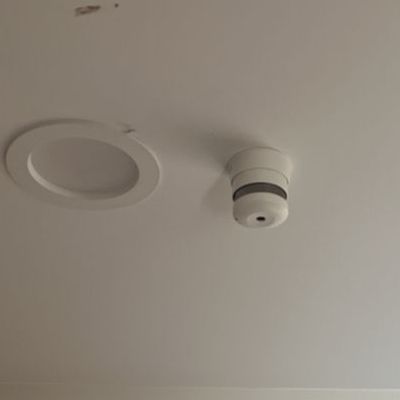
  • Carbon monoxide alarm is missing, not installed, or not installed in a proper location.* No issue N/A LT (Unit)
  • Carbon monoxide alarm is obstructed. No issue N/A LT (Unit) LT (Inside)
  • Carbon monoxide alarm does not produce an audio or visual alarm when tested. No issue N/A LT (Unit) LT (Inside)

Ceiling

  • Ceiling has an unstable surface. No issue N/A M (Unit) M (Inside)
  • Ceiling has a hole. No issue N/A M (Unit) M (Inside)
  • Ceiling component(s) is not functionally adequate. No issue N/A S (Unit) S (Inside)

Chimney

  • A visually accessible chimney, flue, or firebox connected to a fireplace or wood-burning appliance is incomplete or damaged such that it may not safely contain fire and convey smoke and combustion gases to the exterior. No issue N/A LT (Unit) LT (Inside) LT (Outside)
  • Chimney exhibits signs of structural failure. No issue N/A LT (Outside)

Your paper template is ready

Did you know you can run this on myInspections?

  • ✓Snap photos and videos as you go
  • ✓Generate a report you can share with a secure link
  • ✓E-sign the report and invite others to e-sign
  • ✓Third-party backup of your inspection
Try in myInspections

Severity and correction timeframes

Every deficiency carries one of four severities. The severity decides how fast it has to be fixed and whether the unit passes.

Code Severity Correct within Unit result
LTLife-threatening24 hoursFail
SSevere30 daysFail
MModerate30 daysFail
LLowNo deadline, noted for informationPass

The clock starts when the owner is notified of the results. An asterisk (*LT, *M) marks an affirmative habitability requirement under 24 CFR 5.703(d): something the unit must have, like a working smoke alarm or food storage space, rather than something that must not be broken. Unit, Inside, and Outside are HUD's three inspectable areas: inside the unit, the common areas and building systems, and the exterior and site.

From HUD's NSPIRE HCV/PBV Inspection Checklist (OMB 2577-0289).

Pass or fail

A voucher unit passes or fails. Any life-threatening, severe, or moderate deficiency fails it until the fix is confirmed; low deficiencies are written down and the unit passes. The inspector records the result as the summary decision.

Public housing and HUD multifamily properties are inspected and scored by HUD's REAC; see hud.gov/reac/nspire.

Records to keep

  • ✓Keep the records your program requires, and be ready to produce them when HUD, a funder, or an auditor asks.
  • ✓Keep the correction trail with the finding: the 24-hour or 30-day fix, and the evidence it was done.

In myInspections every inspection is dated, every photo is timestamped, the report is a PDF you can export one at a time or in bulk, and past paper inspections can be filed against the property so the whole trail lives in one place.

Things people ask

What is the NSPIRE inspection checklist?
It is HUD's form for inspecting a Housing Choice Voucher or project-based voucher unit against the NSPIRE standards (National Standards for the Physical Inspection of Real Estate). It lists 63 standards, each with the deficiencies an inspector looks for, where each can occur (unit, inside, or outside), and HUD's severity for it.
Who has to run NSPIRE inspections?
Public housing agencies inspect voucher units against the NSPIRE standards using HUD's checklist. Continuum of Care recipients inspect their own units before assistance starts and at least once a year (24 CFR 578.75). Public housing and HUD multifamily properties are inspected and scored by HUD's REAC.
What do LT, S, M, and L mean?
They are HUD's four deficiency severities. A life-threatening (LT) deficiency must be corrected within 24 hours of the owner being notified. Severe (S) and moderate (M) deficiencies must be corrected within 30 days. Low (L) deficiencies are noted for information and do not fail the unit.
How does a unit pass or fail?
Any life-threatening, severe, or moderate deficiency fails the unit until it is corrected and re-inspected. Low deficiencies are recorded, but the unit passes. The inspector records the summary decision as Pass or Fail.
Is myInspections approved by HUD, and does it score my inspection?
No to both. myInspections isn't approved or certified by HUD. It runs HUD's NSPIRE checklist as published and produces the dated, photo-backed record. It doesn't calculate a score or decide pass or fail; your team reviews the report and records the decision.
Can I print the NSPIRE checklist?
Yes. Choose Download on the template page and you get HUD's checklist as a paper form, with a box for every answer and an N/A box for every standard. The same template runs in the myInspections app.

Sources: HUD's NSPIRE final rule announcement (May 10, 2023), the NSPIRE Scoring Notice (88 FR 43371, July 7, 2023), the NSPIRE HCV/PBV Inspection Checklist (OMB 2577-0289), and 24 CFR 578.75. This page explains the rules; it isn't legal advice, and HUD's current notices govern.
In myInspections

Run this checklist from your phone.

Import it once and it's one of your templates. Every standard is a tap: No issue, N/A, or the deficiency with HUD's severity on it, with photos and video beside it. Tap Finish and the report is ready, as a PDF and a digital report, filed under the unit.

Import in one tap, then rename, reorder, or remove checks
Mark a whole standard N/A when the unit hasn't got one
Every answer under its standard in the report, with the photos
Read the guide

Run your first NSPIRE inspection today.

Start your trial, import HUD's checklist, and walk the first unit with your phone.